Reimagining dating for In-person connection & Community
Once Strangers
Product & Community Lead
Purpose
Once Strangers began as an experiment to reimagine how people meet in real life. As co-founder and product lead, I set out to design an experience that makes offline connection feel spontaneous, safe, and meaningful again. Through a combination of user research, service design, and minimalist digital design, we built a scalable model brand for real-world social experiences that help people rediscover what it feels like to talk to strangers.
Problem
In recent years, studies have described loneliness as a growing public health issue, with Gen Z among the most affected. At the same time, dating apps which were originally designed to bring people together have become a primary way to meet others, but they often leave users feeling drained and disconnected.
Prototype
Our initial challenge was to design and launch a pilot event—from the sign-up experience to the in-person interaction. We focused on:
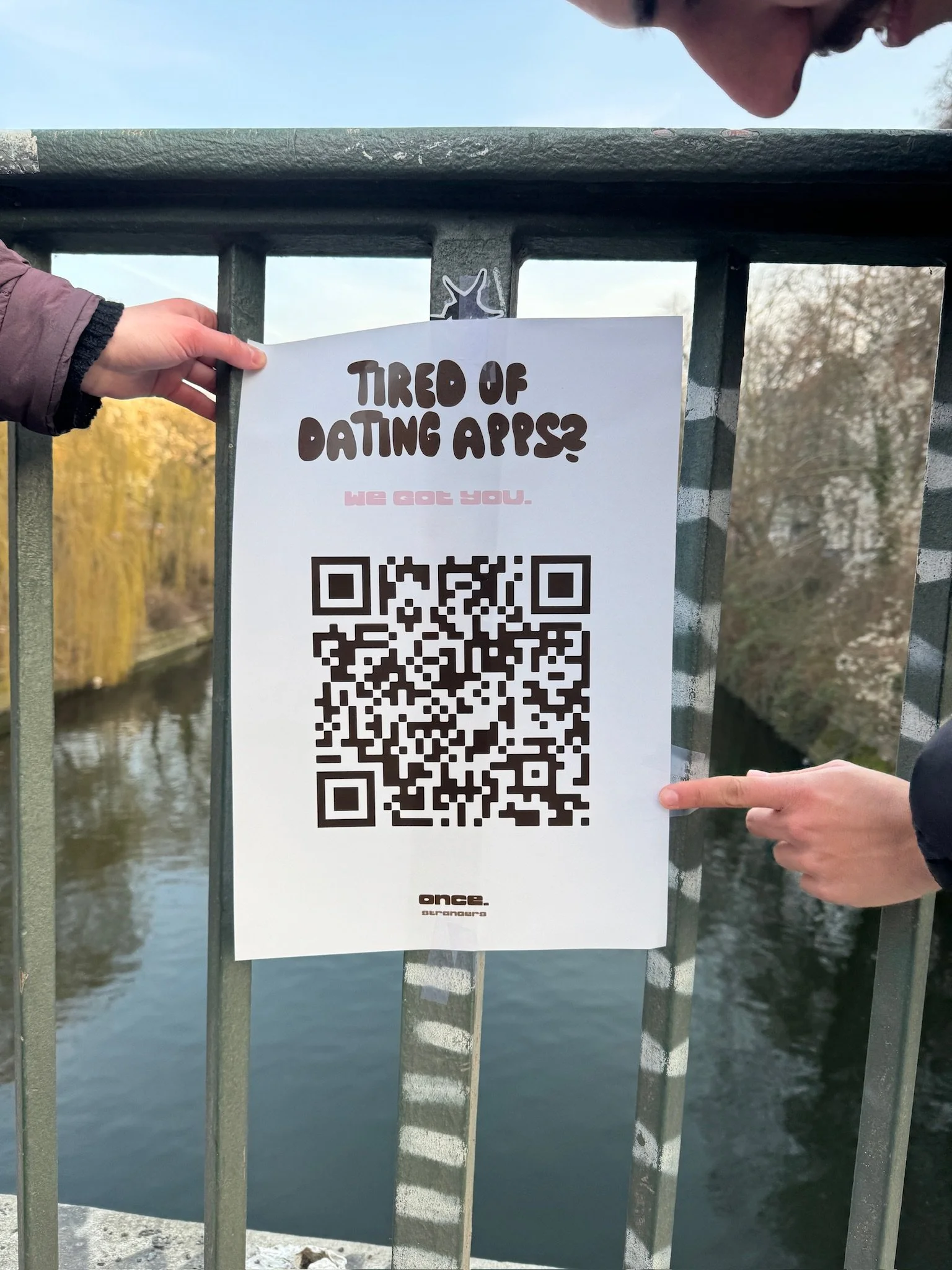
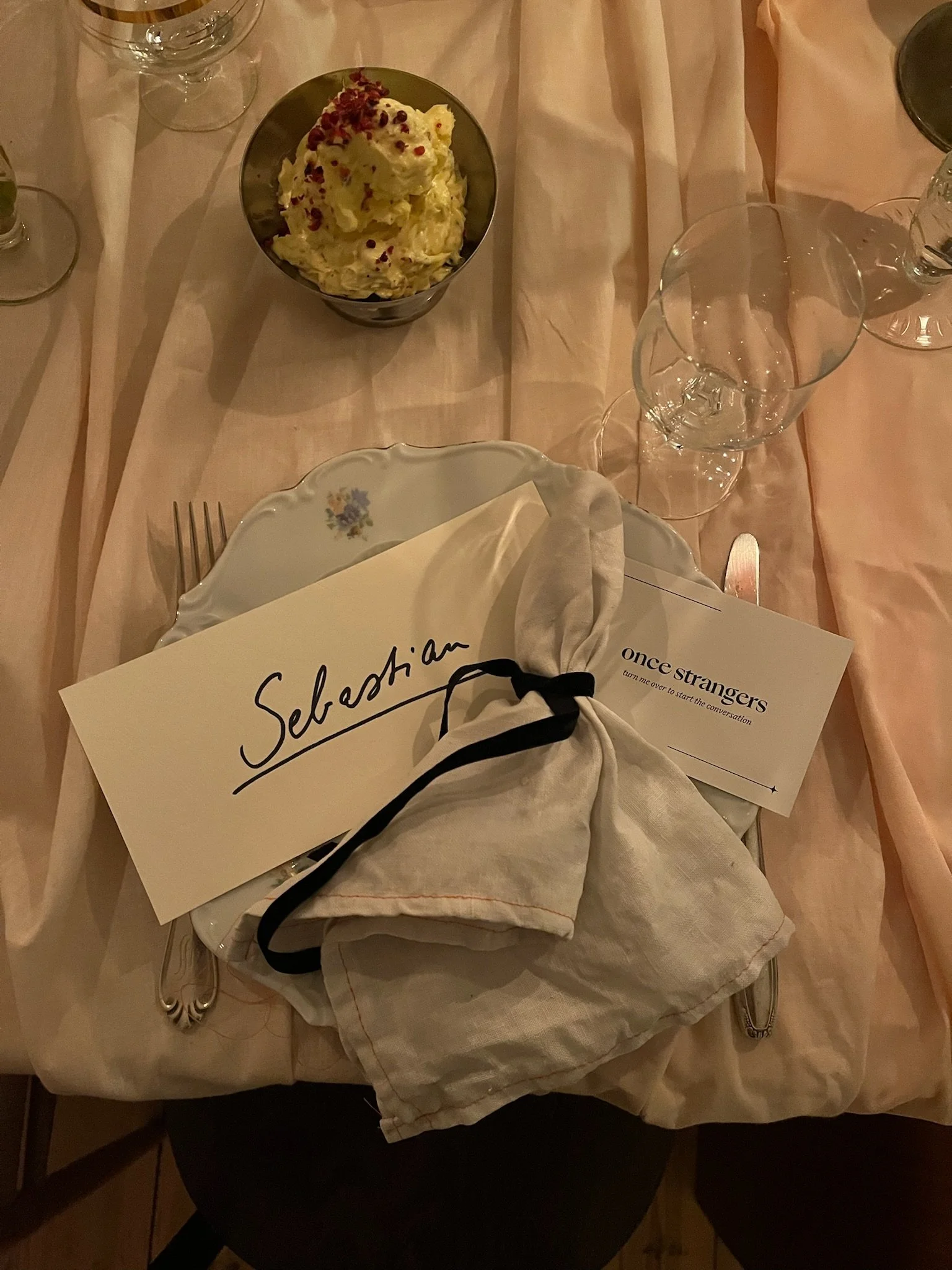
Creating an event concept and brand presence compelling enough for people to trust and pay to attend.
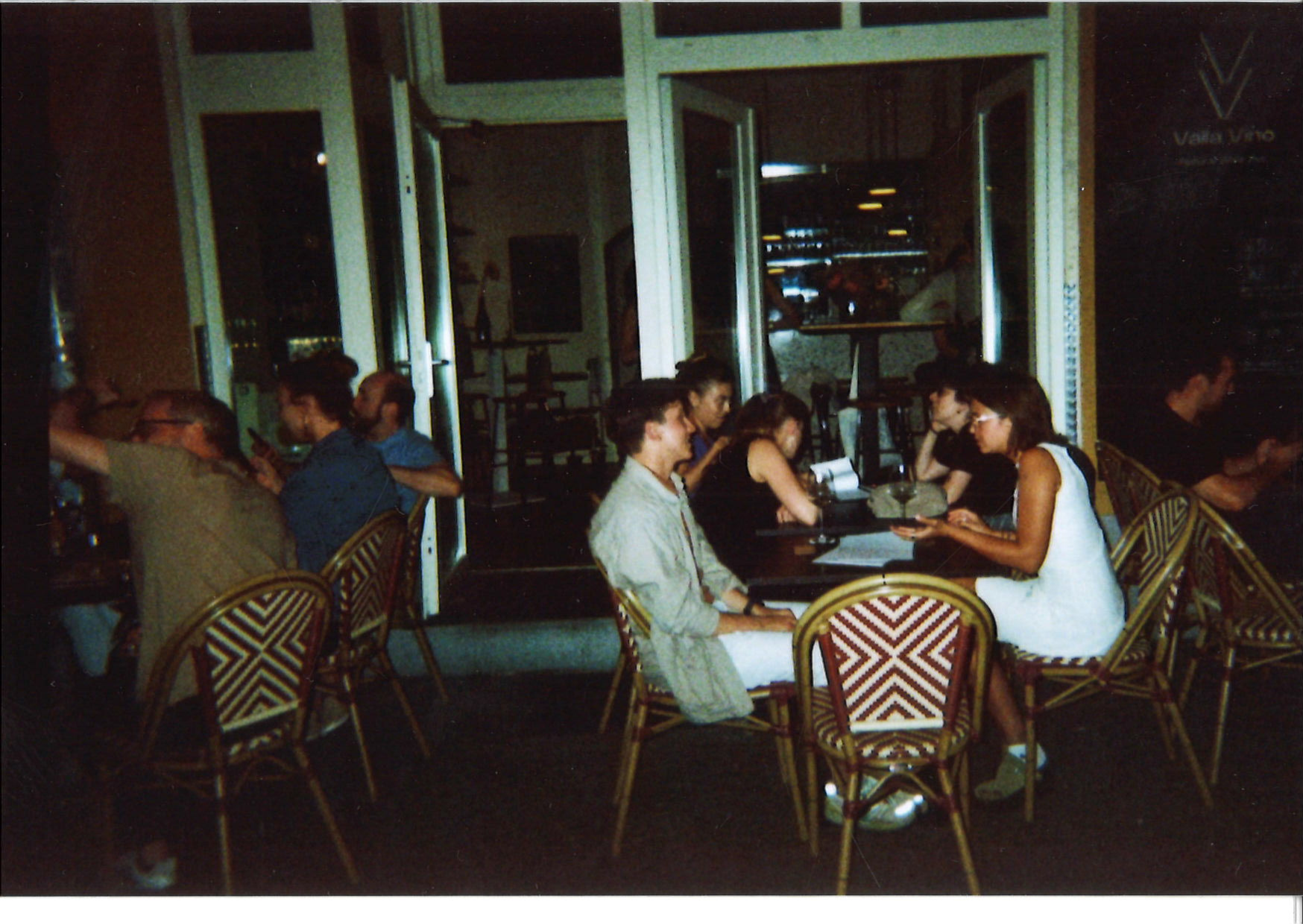
Designing a setting that felt safe, natural, and comfortable for meeting new people.
Using technology (a short questionnaire and matching algorithm) to match compatible guests and customize ice breakers.
Initial Results
The pilot event demonstrated strong desirability and safety but revealed opportunities to improve matching accuracy.
Desirability: 16 strangers paid to attend, with a 100% attendance rate.
Experience: 100% of participants reported feeling safe, and 75% said they would attend again.
Feasibility: Only 25% felt a strong connection with their assigned matches, highlighting the need to refine our matching logic and pre-event data.
Testing & Feedback
Method: User Interviews, Feedback Surveys, Service Design
Tools: Qualitative Interviews, Observation, Notion, Miro
Over the next 20 events, we prototyped and refined the Once Strangers experience through continuous testing—experimenting with price points, venue partnerships, icebreakers, and matching algorithms. Each iteration followed a simple loop: gather user feedback → improve → implement → test again.
Through this process, we gathered many insights including:
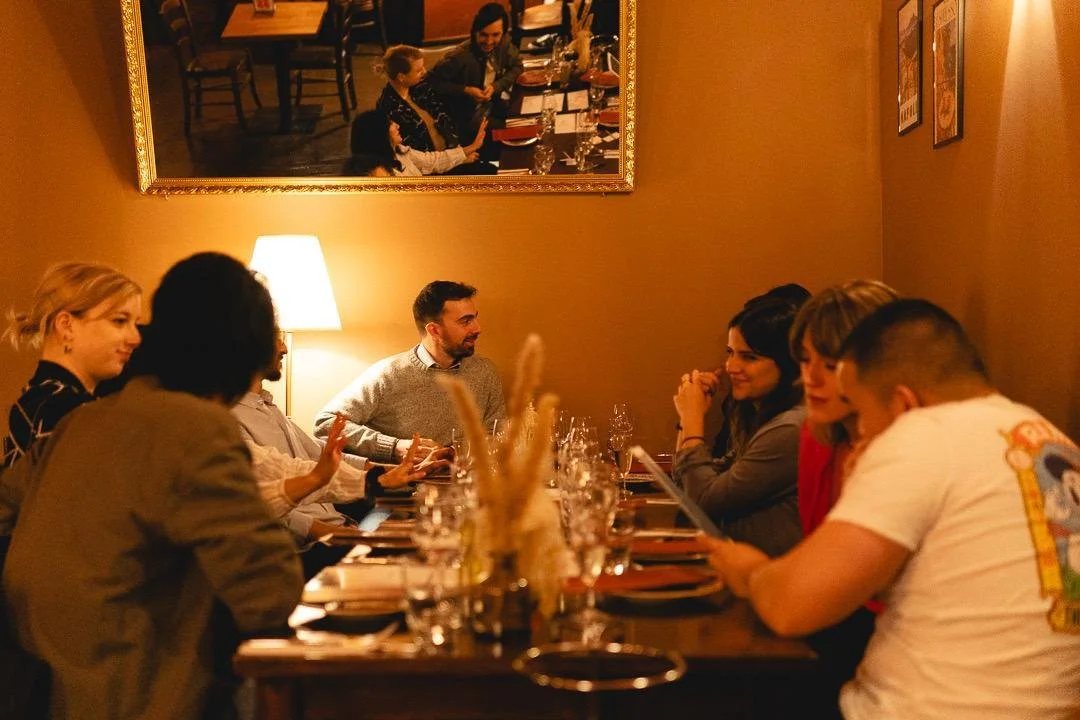
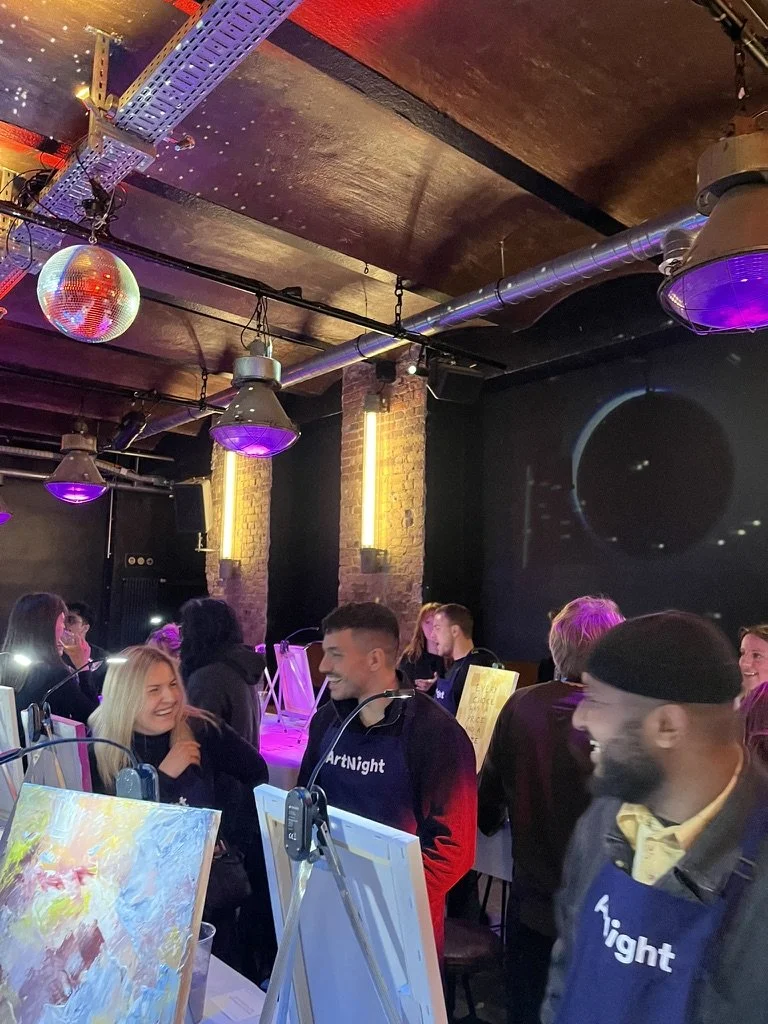
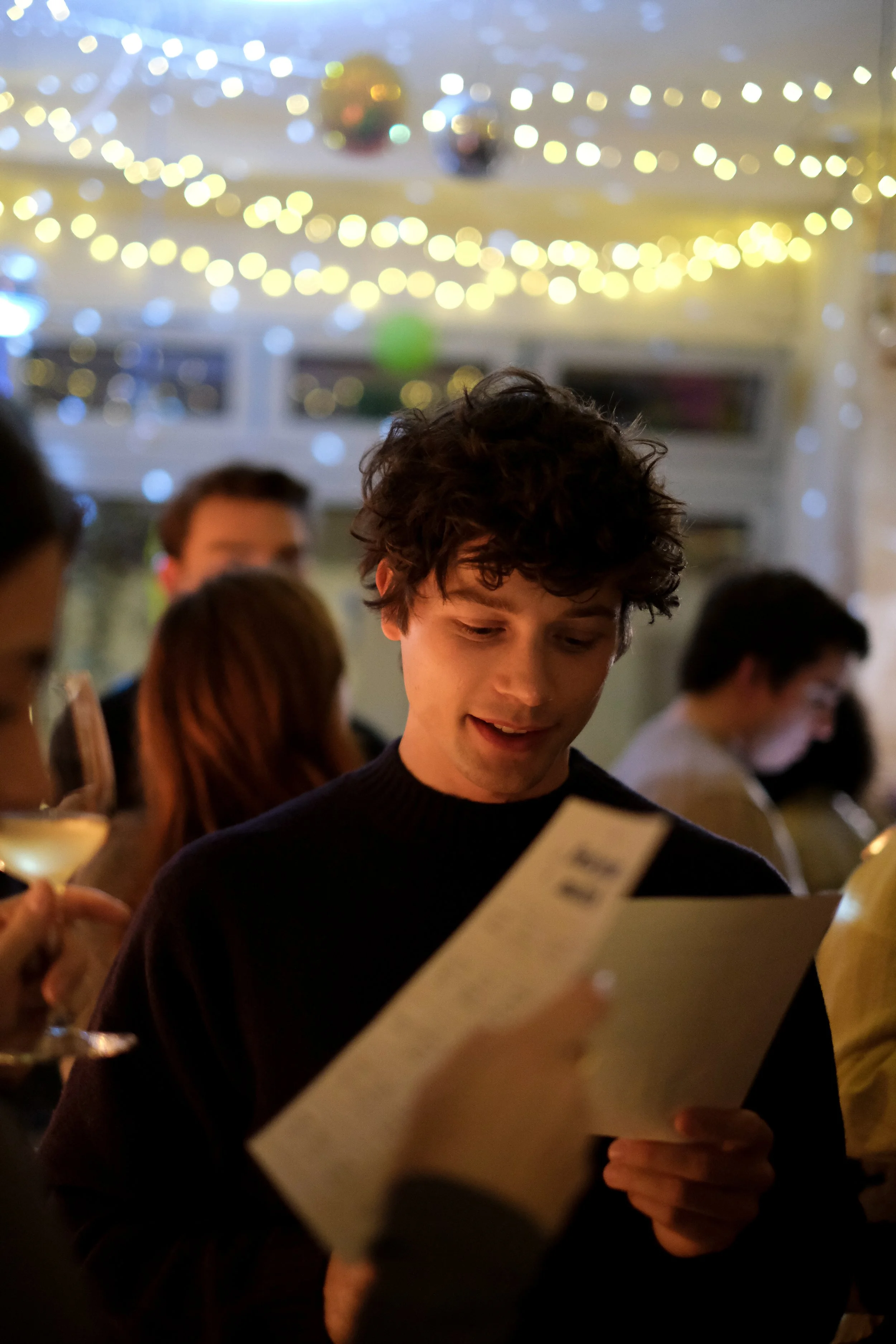
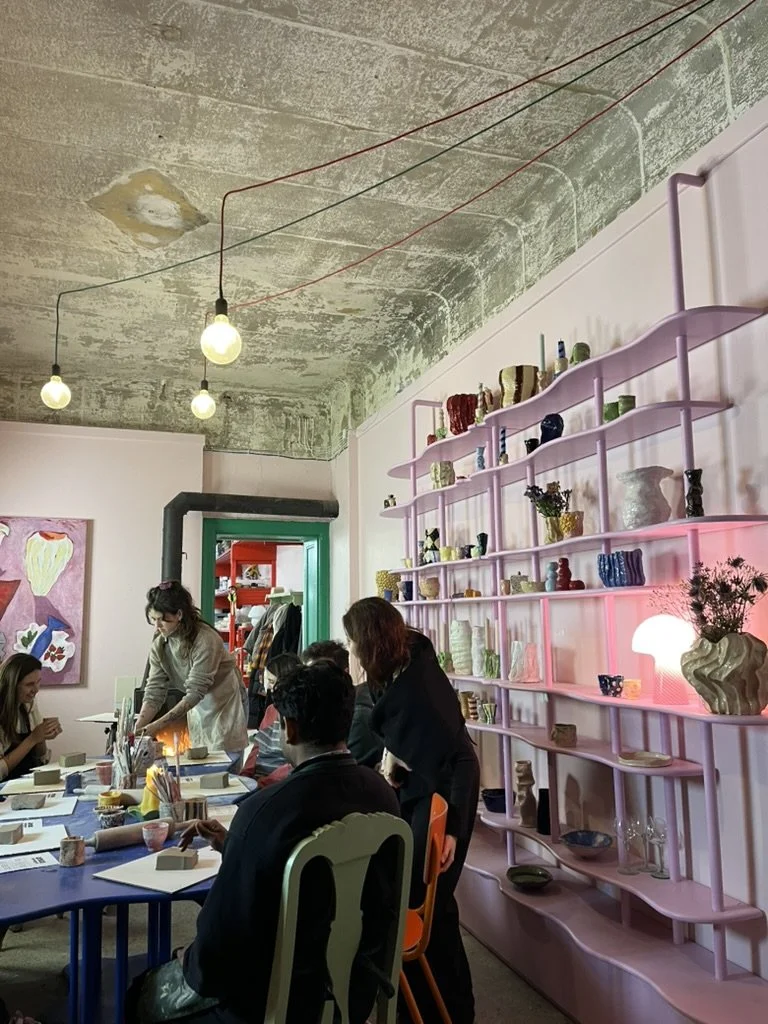
Activity-based events (like shared creative or social experiences) consistently delivered the strongest sense of connection
Group-based matching—pairing compatible small groups instead of 1:1 matches—led to higher participant satisfaction and more post-event connections.
SYSTEM DESIGN
Method: User Journeys, System Mapping, Low-Code Automations
Tools: Retool, N8N, Miro, Notion, Tally, Whatsapp Business
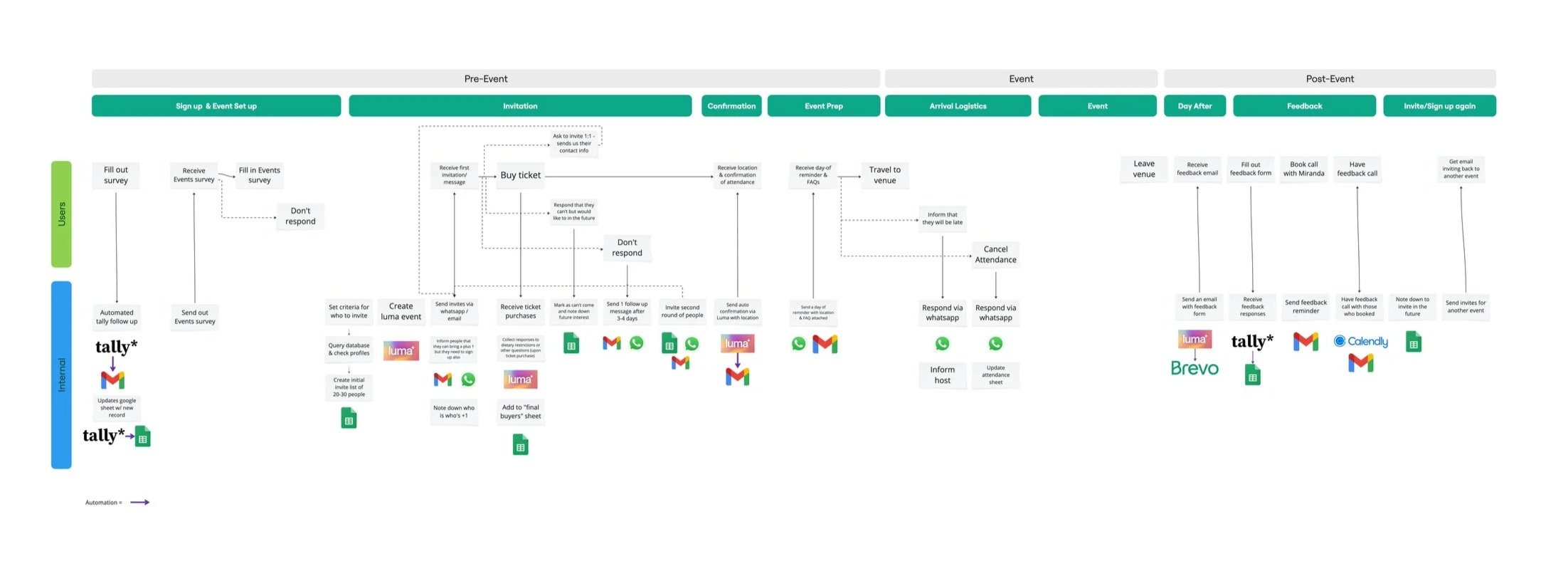
To support growing demand and reduce manual work, I designed a streamlined system that connected every stage of the product lifecycle from curation to invitation to feedback. I built internal tools to manage participant data, automate personalized invites, and collect post-event insights. This system allowed our small team to curate events efficiently, maintain a personal touch at scale, and continuously improve based on real user feedback.